

IronmanTexas: Ανθρώπινη χειρονομία ή γκάφα και παράβαση κανονισμών (ακολουθεί το Ελληνικό κείμενο)
Triathlon enthusiasts witnessed spectacular performances at Ironman Texas, with standout results in both the men’s and women’s categories. The event unfortunately was overshadowed by the tragic death of a 38-year-old female age group participant during the swim.
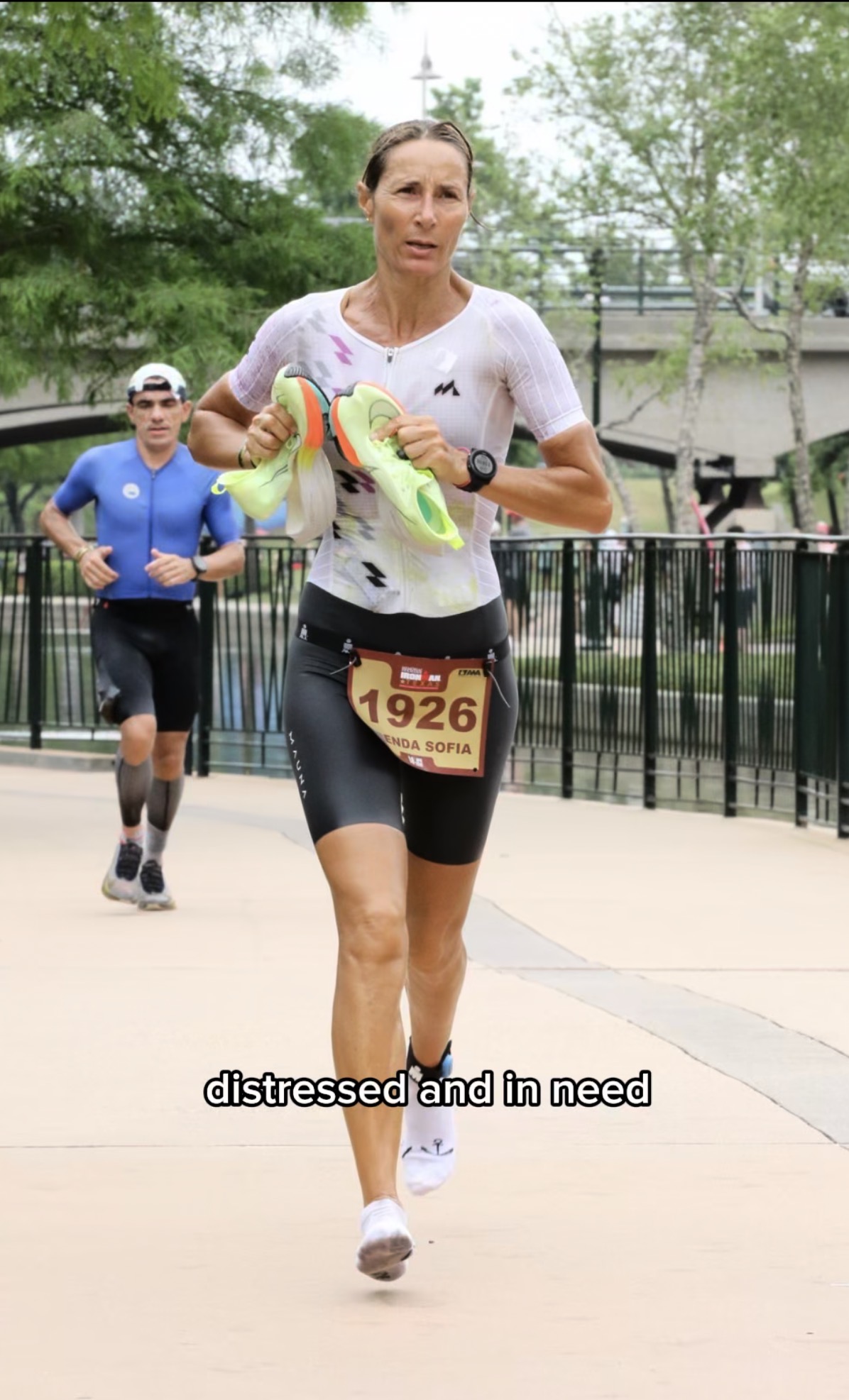
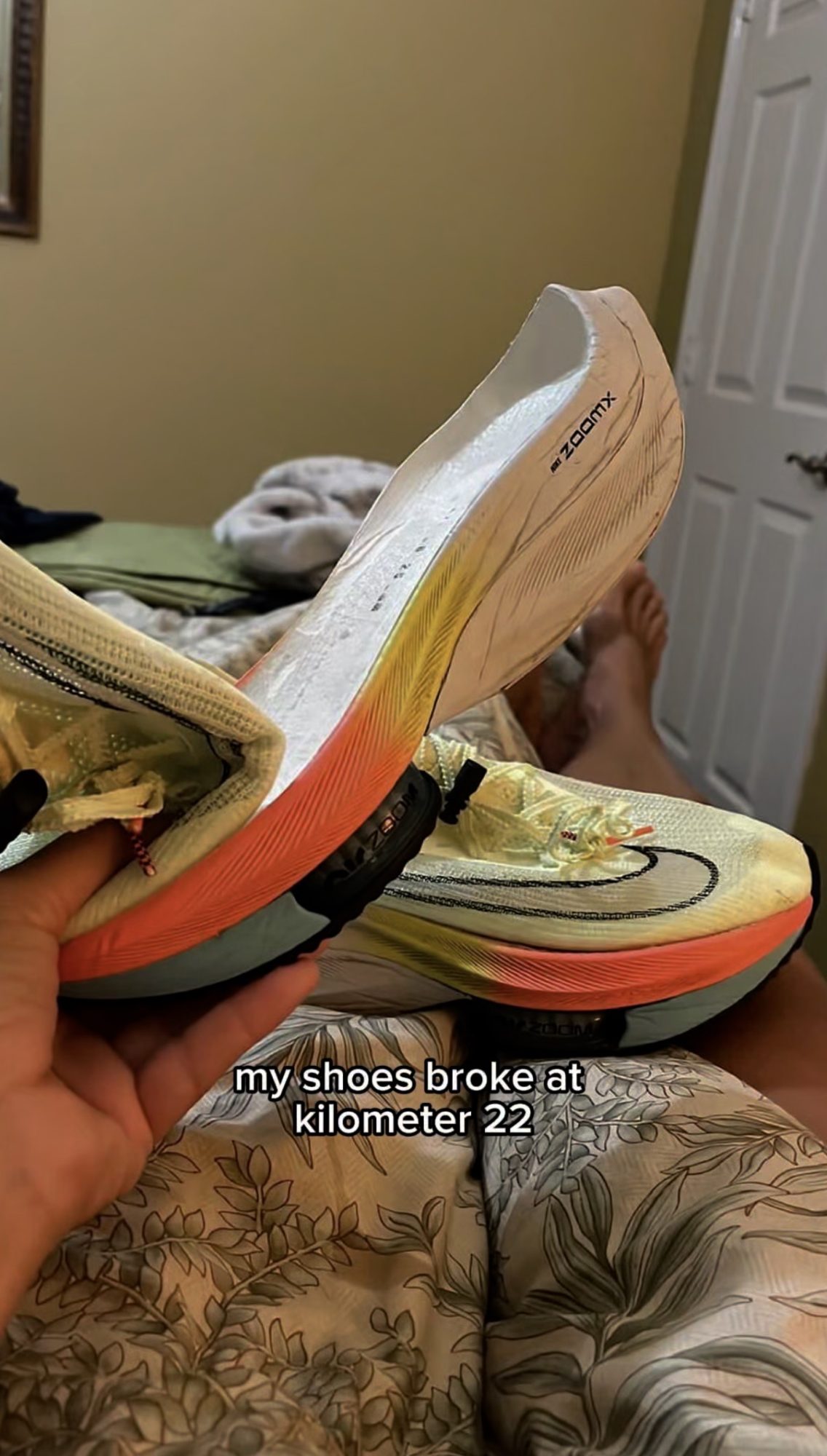
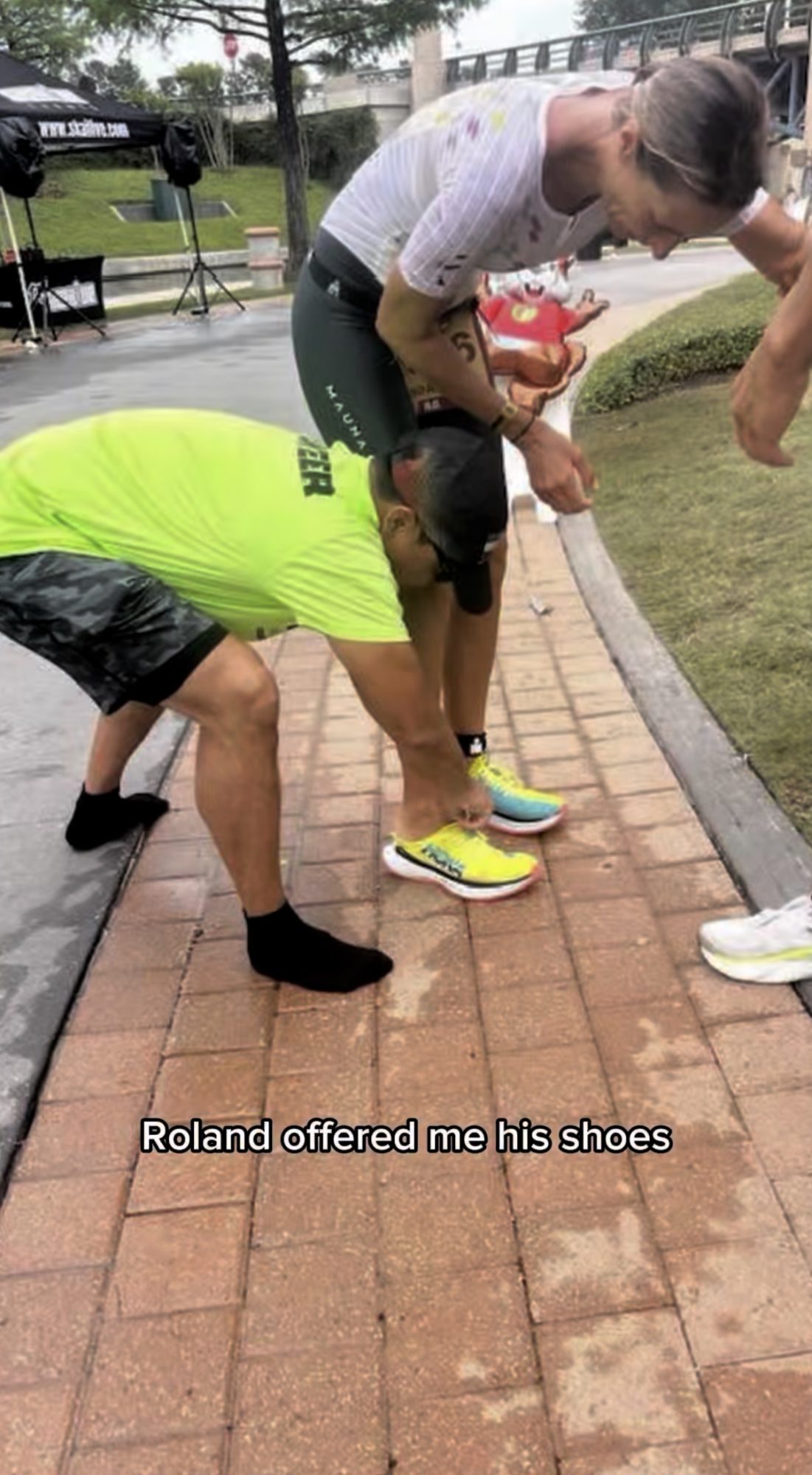
One of the race’s most memorable highlights is a deeply touching story shared on social media. The accompanying video shows a race volunteer offering his shoes to a female age group triathlete who had been running barefoot for some time after the soles of her own shoes came off. The participant went on to win her age group and secure a Kona slot to compete at the Ironman World Championship in October.
Many have praised the volunteer’s gesture and the competitor’s resilience, while others argue that the incident constitutes a rules violation that should lead to the athlete’s disqualification. Those who argue that the incident does not constitute a breach of the regulations contend that no “outside assistance” was involved in the traditional sense. They note that she did not receive help from a spectator but a volunteer, who is permitted to assist under the rules.
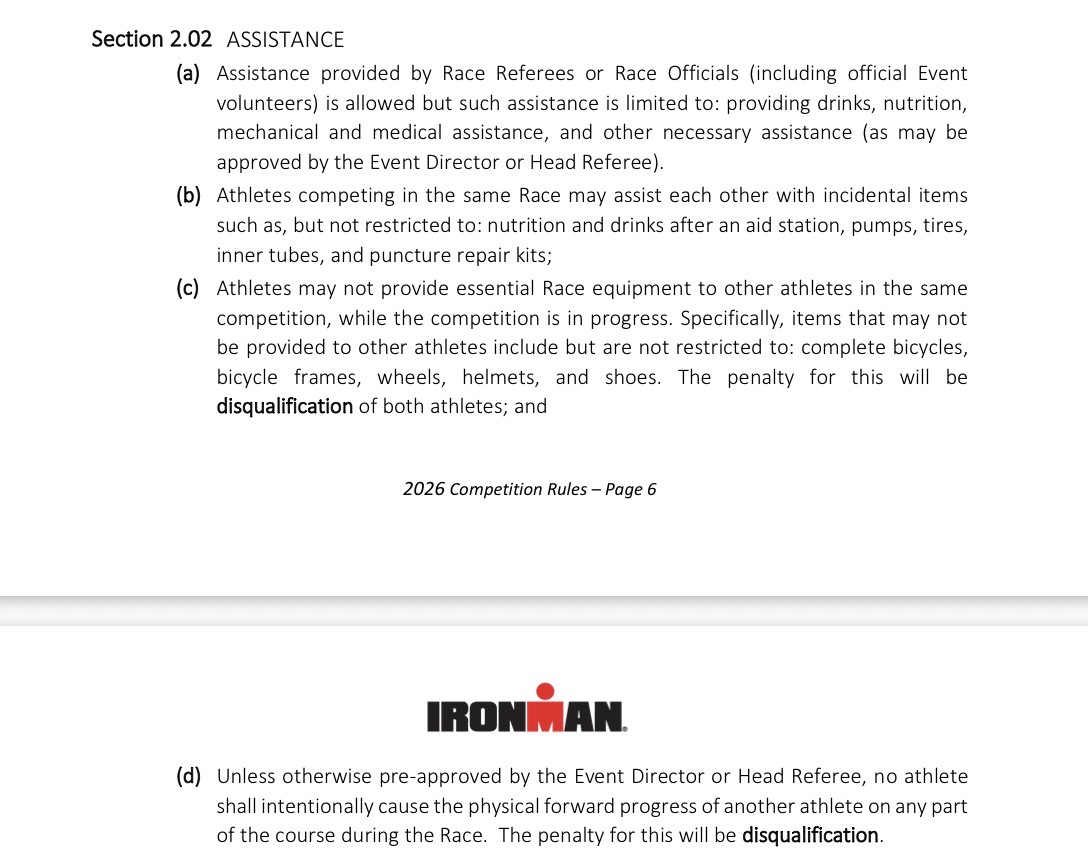
If we refer to Ironman 2026 Competition Rules section 2.02 “Assistance”, in particular at paragraph (a), we see that “assistance provided by race referees or race officials (including official event volunteer) is allowed but limited to: providing drinks, nutrition, mechanical and medical assistance, and other necessary assistance (as may be approved by the event director or head referee)“.
(πηγή φωτογραφιων Northside Running and Tri, instagram profile https://www.instagram.com/reel/DXZVcuUirr8/?igsh=YjE4dnR3bnozOGt3)
A volunteer may therefore render assistance to a participant, but only within specified limits. It’s clear that running shoes don’t fall under “drinks, nutrition, mechanical and medical assistance.” The question is whether shoes could be considered “other necessary assistance.” One possible example of necessary assistance would be a volunteer on a kayak during the swim allowing a participant who is in trouble to hold onto the kayak for a short time to regain control and breathing, without exiting the water and climbing onto the kayak. Other examples could include volunteers handing flashlights to participants after sunset, or offering warm clothing if conditions become extremely cold.
That said, whether shoes qualify as “necessary assistance” depends on how broadly the rule is interpreted, and on whether the incident can be viewed as restoring the athlete to a safe, viable condition rather than providing competitive advantage. So let us consider whether the athlete gained a competitive advantage. Not, if we assume she had the alternative option of choosing a brand-new pair of shoes like the ones she usually runs in, that fit her well. But yes, if we consider that at that point she was running barefoot. More importantly, however, her competitors probably lost whatever competitive advantage they had over her at that moment.
At this stage it’s worth considering paragraph (c) of section 2.02, which states that “athletes may not provide essential race equipment to other athletes in the same competition while the competition is in progress.” It further specifies that prohibited items include “complete bicycles, bicycle frames, wheels, helmets, and shoes” and that the penalty for a violation is disqualification of both athletes.
Paragraph (c) is especially important even if the incident did not involve one athlete providing equipment to another competitor. The reason is straightforward: Ironman rules define shoes as essential race equipment. Accordingly, it appears the volunteer provided “essential equipment”, not “necessary assistance.” Aren’t triathletes expected to exercise due diligence to ensure they start the race with all essential equipment in good working order?
Would it be acceptable for a volunteer to hand a participant a complete bicycle halfway through the bike course? If not, then why would it be acceptable to hand a pair of shoes to an athlete during the run, when under Ironman rules both bicycle and shoes are considered essential equipment? And what if the volunteer had given his shoes to a professional athlete instead, who went on to win the race and the prize money? Would we still be having the same discussion?
We would like to raise a few questions and hope that Ironman will respond. As the triathlon community, and particularly as age group triathletes, who are Ironman’s number one customers, we would like to know whether Ironman is committed to enforcing the rules and ensuring strict compliance.
– Was this issue raised before the awards ceremony and Kona slot allocation?
– If yes, what was the head referee’s verdict and on what grounds? This will help us understand how the rules of our sport are applied and ensure that we all abide by them.
– If not, now that the issue has been raised, will Ironman take any action? Will any retroactive decision be made?
– If Ironman decides to disqualify the athlete involved, will the awards for the age group be reallocated accordingly, i.e. the athlete who finished second moved to first, third moved to second, and fourth moved to third?
– If the athlete is disqualified, will her Kona slot be rolled to the next athlete in the pool in accordance with the new qualification system? If so, will Ironman notify the eligible athletes who are next in line?
– Last but not least, are official volunteers at Ironman races properly briefed and informed about what they are permitted to do and what they are not permitted to do?
We strongly believe that both the volunteer and the participant, who is indeed a top age-group triathlete and can qualify for Kona in any race at any time, acted in good faith, without any intention to break the rules. However, when determining whether a rule breach actually occurred, intention is irrelevant, and emotions are not a factor to consider.
IronmanTexas: Ανθρώπινη χειρονομία ή γκάφα και παράβαση κανονισμών (Ελληνικό κείμενο)
Θεαματικές επιδόσεις σημάδεψαν το Ironman Texas, με κορυφαία αποτελέσματα σε άνδρες και γυναίκες. Τη γιορτή του αθλήματος σκίασε ο τραγικός θάνατος 38χρονης αθλήτριας στις ηλικιακές κατηγορίες κατά τη διάρκεια της κολύμβησης.
Η στιγμή που έκλεψε την παράσταση ήρθε όμως από τα social media. Ένα βίντεο που δείχνει έναν εθελοντή να βγάζει τα παπούτσια του και να τα δίνει σε κάποια αθλήτρια που έτρεχε ξυπόλυτη, αφού οι σόλες των δικών της παπουτσιών είχαν ξεκολλήσει. Η αθλήτρια όχι μόνο τερμάτισε, αλλά κέρδισε την ηλικιακή της κατηγορία και εξασφάλισε το εισιτήριο για το Παγκόσμιο Πρωτάθλημα Ironman στην Kona τον ερχόμενο Οκτώβριο.
Η κίνηση δίχασε. Από τη μία, αποθεώθηκε ο εθελοντής για την ανθρώπινη χειρονομία του και η αθλήτρια για την ψυχική της δύναμη. Από την άλλη, πολλοί μιλούν για ξεκάθαρη παράβαση που επιφέρει αποκλεισμό. Οι υποστηρικτές της αθλήτριας επιμένουν ότι δεν υπήρξε «εξωτερική βοήθεια» με τη στενή έννοια εφόσον δεν τη βοήθησε θεατής αλλά εθελοντής, καθώς οι εθελοντές επιτρέπεται να βοηθούν.
Τι λένε όμως οι κανονισμοί; Σύμφωνα με τους Κανονισμούς Αγώνων Ironman 2026, ενότητα 2.02 «Βοήθεια», παράγραφος (a), η βοήθεια από κριτές ή επίσημους εθελοντές «επιτρέπεται αλλά περιορίζεται σε: υγρά, τροφή, μηχανική και ιατρική βοήθεια, καθώς και άλλη απαραίτητη βοήθεια, εφόσον εγκριθεί από τον διευθυντή του αγώνα ή τον επικεφαλής κριτή».
Προφανώς, τα παπούτσια δεν είναι ούτε νερό, ούτε τζελ, ούτε μηχανική ή ιατρική βοήθεια. Το ερώτημα είναι: εμπίπτουν στην «άλλη απαραίτητη βοήθεια»; Απαραίτητη βοήθεια θα ήταν, για παράδειγμα, να επιτραπεί σε αθλητής που κινδυνεύει να πιαστεί από το καγιάκ ασφαλείας για να πάρει ανάσα, χωρίς να βγει από το νερό. Ή να δοθούν φακοί μετά τη δύση του ηλίου και ζεστά ρούχα σε ακραίο κρύο.
Το αν τα παπούτσια θεωρούνται απαραίτητη βοήθεια εξαρτάται από την ερμηνεία: επανέφεραν την αθλήτρια σε ασφαλή κατάσταση ή της έδωσαν αγωνιστικό πλεονέκτημα; Ας εξετάσουμε λοιπόν αν η αθλήτρια απέκτησε αγωνιστικό πλεονέκτημα. Όχι, εάν υποθέσουμε ότι είχε τη δυνατότητα να επιλέξει ένα ολοκαίνουργιο ζευγάρι, όπως αυτά με τα οποία τρέχει συνήθως και της ταιριάζουν καλά, όμως επέλεξε τα παπούτσια του εθελοντή. Αλλά ναι, εάν λάβουμε υπόψη ότι εκείνη τη στιγμή έτρεχε ξυπόλυτη. Το πιο σημαντικό, ωστόσο, είναι ότι οι συναθλήτριές της πιθανότατα έχασαν οποιοδήποτε αγωνιστικό πλεονέκτημα είχαν έναντι αυτής εκείνη τη στιγμή.
Τώρα οφείλουμε να εξετάσουμε και την παράγραφο (c) της ίδιας ενότητας που λέει πως: «Απαγορεύεται οι αθλητές να παρέχουν βασικό αγωνιστικό εξοπλισμό σε άλλους αθλητές κατά τη διάρκεια του αγώνα». Η λίστα περιλαμβάνει ρητά «ολόκληρα ποδήλατα, πλαίσια, τροχούς, κράνη και παπούτσια». Ναι, παπούτσια. Η ποινή; Αποκλεισμός και για τους δύο. Μπορεί να μην έδωσε αθλητής τα παπούτσια, αλλά εθελοντής, η ουσία όμως είναι πως για το Ironman «τα παπούτσια είναι βασικός αγωνιστικός εξοπλισμός». Άρα ο εθελοντής δεν παρείχε απαραίτητη βοήθεια, παρείχε βασικό εξοπλισμό. Δεν οφείλουν οι αθλητές να ξεκινούν τον αγώνα έχοντας ελέγξει ότι όλος ο εξοπλισμός τους είναι σε άριστη κατάσταση;
Και πλέον τίθεται το εύλογο ερώτημα: Θα δεχόμασταν ποτέ εθελοντής να δώσει ολόκληρο ποδήλατο σε αθλητή στα μισά της διαδρομής; Αν όχι, γιατί να δεχτούμε να δώσει παπούτσια στο τρέξιμο εφόσον και τα δύο είναι βασικός εξοπλισμός με βάση τους κανονισμούς; Κι αν ο εθελοντής έδινε τα παπούτσια του σε επαγγελματία, o οποίος τελικά κέρδιζε τον αγώνα και το προβλεπόμενο χρηματικό έπαθλο; Θα συζητούσαμε ακόμα το ίδiο;
Η κοινότητα του τριάθλου, ειδικά οι age groupers οι οποίοι είναι οι βασικοί πελάτες του Ironman, ζητά απαντήσεις. Το Ironman δεσμεύεται να εφαρμόζει τους κανόνες του χωρίς εκπτώσεις, ναι ή όχι;
– Εξετάστηκε το θέμα πριν από τις απονομές και τη διανομή των slots για το παγκόσμιο πρωτάθλημα;
– Αν ναι, ποια ήταν η απόφαση του επικεφαλής κριτή και με ποιο σκεπτικό; Οι αθλητές πρέπει να ξέρουν πώς ερμηνεύονται οι κανόνες.
– Αν όχι, θα υπάρξει αναδρομική απόφαση τώρα που το ζήτημα τέθηκε δημόσια;
– Αν υπάρξει αποκλεισμός της αθλήτριας, θα γίνει ανακατανομή των θέσεων; Η δεύτερη πρώτη, η τρίτη δεύτερη, η τέταρτη τρίτη;
– Θα μετακυλιστεί το slot για την Kona στην επόμενη αθλήτρια της λίστας; Θα ενημερωθούν οι επιλαχούσες;
– Τέλος, επαιδεύονται σωστά οι εθελοντές για το τι επιτρέπεται και τι απαγορεύεται να κάνουν;
Κανείς δεν αμφισβητεί την καλή πρόθεση. Τόσο ο εθελοντής όσο και η αθλήτρια , μια κορυφαία age grouper που μπορεί να προκριθεί στην Kona όποτε θέλει, ενήργησαν καλόπιστα. Όμως στους κανονισμούς, η πρόθεση δεν μετράει. Ούτε το συναίσθημα.
___________________________________________________________________________
Αναζητήστε τους Κανονισμούς Αγώνων Ironman 2026 εδώ
www.ironman.com/sites/default/files/2026-02/2026%20IRONMAN%20Competition%20Rules_Final_V2.pdf
___________________________________________________________________________
https://www.instagram.com/reel/DXZVcuUirr8/?igsh=YjE4dnR3bnozOGt3
Photo credits: ironman com